ERDERA funds new research consortia on rare diseases
The European Rare Diseases Research Alliance (ERDERA) has announced the establishment of 18 new research consortia in Europe to advance research into rare diseases. Two of these consortia are being established at Heinrich Heine University Düsseldorf and the University Hospital Düsseldorf. A team led by Prof. Alessandro Prigione from the Department of General Pediatrics, Neonatology and Pediatric Cardiology is investigating new therapeutic approaches for the Leigh syndrome spectrum. Another team led by PD Nico Melzer from the Department of Neurology is dedicated to autoimmune brain inflammation that leads to epilepsy.
Rare diseases affect less than five in 10,000 people in Europe, with around 8,000 such diseases known. Despite low case numbers per disease, about four million people are affected in Germany. The limited number of cases complicates research, while the need for therapies is high. ERDERA aims to improve prevention, diagnosis and treatment through Europe-wide cooperation. The new consortia are intended to drive this process forward.
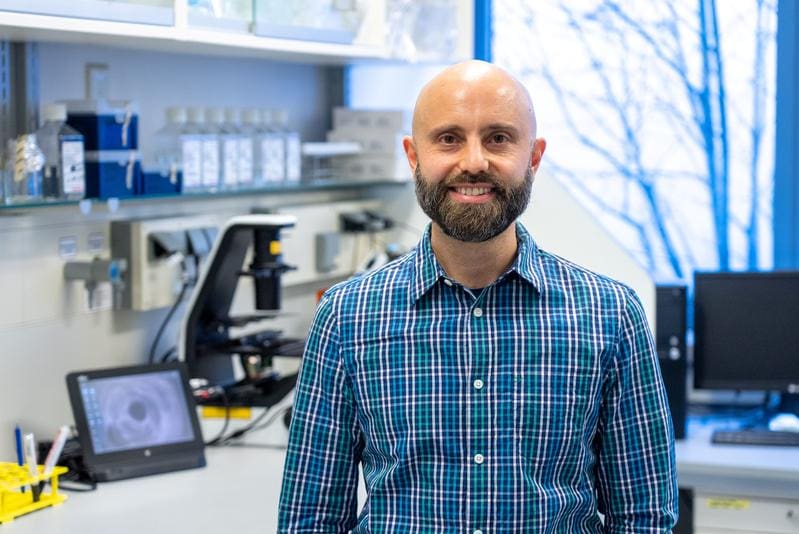
The SynLeigh consortium, led by Prof. Alessandro Prigione, focuses on Leigh syndrome spectrum disorders, which affect about one in 40,000 live births worldwide. These diseases cause neurodevelopmental delays, movement disorders and a shortened life expectancy. Many forms are currently incurable. The project identifies therapeutic interventions and their potential synergies to develop a clinical trial plan. It is investigating two new compounds that have been discovered by consortium members and have already received orphan drug designation. In vitro studies, animal models and computer models are used to test efficacy and toxicity, including potential synergies.
The T-CARE consortium, led by PD Nico Melzer, investigates autoimmune limbic encephalitis and Rasmussen’s encephalitis. These autoimmune brain inflammations are caused by the body’s own immune system and can trigger epileptic seizures as well as motor and cognitive disorders in children and adults. They often lead to irreversible brain damage and therapy-resistant epilepsy. T cell reactions against nerve and supporting cells in the brain play a key role. Currently, there is a lack of approved, targeted treatments, especially those that inhibit T cell responses. The consortium has developed models to investigate these reactions in animal experiments and to test an active substance. Experts in immunology and epileptology are working together to create the basis for further research and, in the long term, a therapy.
ERDERA promotes interdisciplinary and international cooperation. SynLeigh cooperates with institutions from Hamburg, Luxembourg, Milan, Montreal, Barcelona, Luxembourg and Latvia as well as patient organisations such as International Mito Patients, Cure Mito and Mitocon. T-CARE works with partners from Frankfurt, Dublin, Geneva, Milan and Istanbul. These networks are intended to strengthen the exchange of knowledge and make research more efficient.
Read more:
Joint Transnational Call 2025 – ERDERA
Editor: X-Press Journalistenbüro GbR
Gender Notice. The personal designations used in this text always refer equally to female, male and diverse persons. Double/triple naming and gendered designations are used for better readability. ected.
Most read
 Hantavirus: detection, symptoms, therapy What is hantavirus? Hantaviruses are a group of viruses that occur worldwide and are mainly transmit...
- Impending fuel shortage: “If the laboratory fails, medical care will come to a standstill in large parts” DGKL CEO Jan Wolter explains the dramatic consequences of a potential fuel shortage for laboratory m...
- Hantavirus: Facts instead of panic Reports of three deaths in connection with a hantavirus outbreak on the cruise ship "MV Hondius" in...