Digitization of the healthcare system stagnates
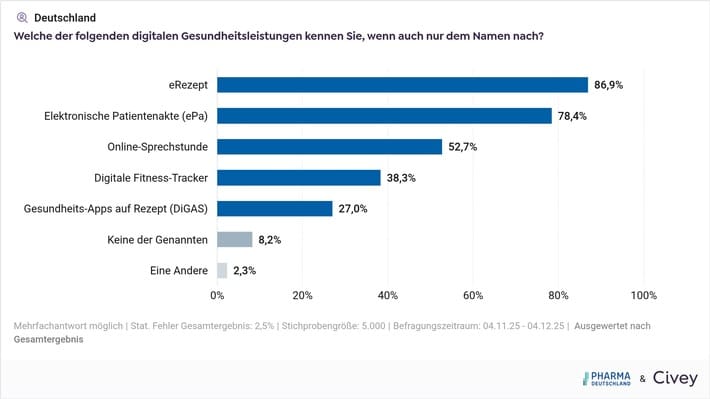
The digitization of the German healthcare system is making slow progress. A recent Civey survey commissioned by Pharma Deutschland shows that the number of users of central digital applications such as e-prescriptions, electronic patient records (ePAs) and health applications on prescription (DiGAs) is significantly lower than their level of awareness. The results highlight untapped potential and regional and demographic differences in the acceptance of digital health services.
Background: Digitalisation as the key to healthcare
The digitization of the healthcare system is considered a central pillar for making care more efficient, patient-oriented and data-supported. With the introduction of the e-prescription in 2023, the mandatory use of the ePA by service providers since October 2025 and the DiGAs available since 2021, digital solutions should have long been established in everyday life. These applications enable faster communication between doctors, pharmacies and patients, improved documentation of health data and the integration of innovative health apps into care. In addition, they offer potential for health research, for example through supply-related data for drug development and pharmacovigilance. However, acceptance remains low, which raises questions about implementation, user-friendliness and communication.
Survey results: Awareness exceeds usage
The survey, conducted at the beginning of December 2025, shows that the e-prescription is the most established application with 86.9 percent awareness, but is only used by 59.3 percent of respondents – a marginal increase of 55.7 percent compared to June 2025. The ePA, which is particularly popular with trainees, has increased its user rate from 12.1 percent in June to 20.3 percent, but remains far below expectations. Only 27.0 percent of the population are aware of
Demographic and regional differences
The survey reveals striking differences in usage. The age group of 30 to 39-year-olds leads in e-prescription use, while 18 to 29-year-olds lag behind, almost 40 percentage points behind. Regionally, Saxony-Anhalt is ahead of Baden-Württemberg in terms of e-prescription use, which indicates differences in technical infrastructure or information campaigns. In terms of gender, women use the e-prescription more often, while men dominate the ePA. Households with children show almost twice as much use of DiGAs compared to childless households, which could indicate a higher need for health apps.
Challenges and perspectives
The low use of digital applications could be due to several factors: lack of usability, privacy concerns, inadequate education, or technical hurdles, especially in rural areas. The survey shows that younger generations who are considered tech-savvy are not automatically pioneers, indicating a lack of information or low trust. Regional differences point to inconsistent implementation, which could be compensated for by targeted funding programmes.
In order to drive digitalization, intensified information campaigns, simplified access and training for patients and service providers are necessary. The integration of digital applications into the everyday lives of insured persons also requires stronger cooperation between politicians, health insurance companies and healthcare providers.
Read more:
Read Also:
Laboratory medicine: Jakob Adler on ePA and MIO laboratory findings – MedLabPortal
AI in chemistry: Machine beats humans – but with weaknesses – MedLabPortal
Editor: X-Press Journalistenbüro GbR
Gender Notice. The personal designations used in this text always refer equally to female, male and diverse persons. Double/triple naming and gendered designations are used for better readability. ected.
Most read
 Hantavirus: detection, symptoms, therapy What is hantavirus? Hantaviruses are a group of viruses that occur worldwide and are mainly transmit...
- Impending fuel shortage: “If the laboratory fails, medical care will come to a standstill in large parts” DGKL CEO Jan Wolter explains the dramatic consequences of a potential fuel shortage for laboratory m...
- Hantavirus: Facts instead of panic Reports of three deaths in connection with a hantavirus outbreak on the cruise ship "MV Hondius" in...