New lab-on-a-chip system simulates biomechanical cell interactions
Researchers at the Max Planck Institute for the Science of Light (MPL) have developed an innovative lab-on-a-chip system that exerts precise compressive forces on cellular microenvironments. The method, which uses intelligent hydrogel microstructures, could revolutionize medical diagnostics of mechanical tissue disorders in the future.
The extracellular matrix, a three-dimensional network in which cells are embedded, plays a central role in biological processes such as wound healing or homeostasis. Previous laboratory methods for simulating these biomechanical interactions were inaccurate and difficult to integrate into lab-on-a-chip systems. The team led by Dr. Katja Zieske has now developed a system that simulates spatially and temporally controlled mechanical disturbances in biological polymer networks.
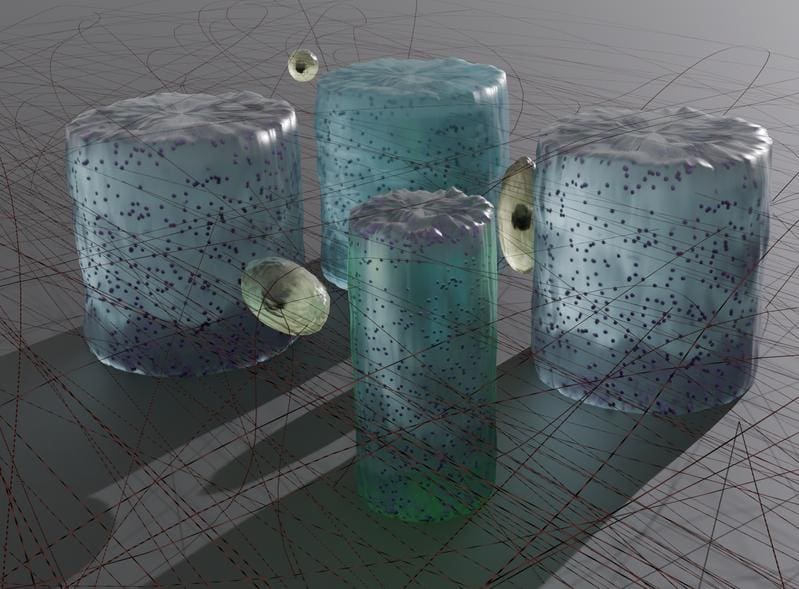
At the heart of the method are intelligent hydrogels that react to stimuli such as light or temperature by contracting or expanding. Thermoresponsive hydrogel microstructures that compress networks such as collagen or matrigel were tested in flow chambers. Collagen showed elastic relaxation, matrigel plastic deformation. The method enables microscopic investigations of biological processes and is compatible with living cells.
The technology allows precise force application and detection of changes at a distance of hundreds of micrometers. Future applications could include research into the extracellular matrix or diagnostics in 3D cell models such as cancer or vascular models. The system promises to be used as a micromachine in tissue manipulation and could form the basis for advanced diagnostic procedures.
Original Paper:
Editor: X-Press Journalistenbüro GbR
Gender Notice. The personal designations used in this text always refer equally to female, male and diverse persons. Double/triple naming and gendered designations are used for better readability. ected.
Most read
 Wal Timmy: Environment Minister Backhaus ignored rescue technology that has been in place since 1983 The stranded humpback whale "Timmy" suffered severely for days in Mecklenburg-Western Pomerania beca...
- Wal Timmy: Germany’s problem with euthanasia EDITORIAL. Letting Timmy suffer is more due to the German lack of experience and the bureaucratic hu...
- Impending fuel shortage: “If the laboratory fails, medical care will come to a standstill in large parts” DGKL CEO Jan Wolter explains the dramatic consequences of a potential fuel shortage for laboratory m...