Digital twin simulates patient-specific heart
In the SmartHeart project, researchers at Munich University of Applied Sciences have simulated a pulsating heart that can be adapted to specific patients using AI methods. The digital twin is intended to support physicians in researching the causes of cardiovascular diseases and predict the effects of interventions.
Cardiovascular diseases are the most common cause of death in Germany, with more than 300,000 cases per year. The causes are multifactorial and difficult to investigate in patients. In his doctoral thesis, Ludwig Wagmüller developed a personalized computer model of the cardiovascular system for analyses without invasive procedures.
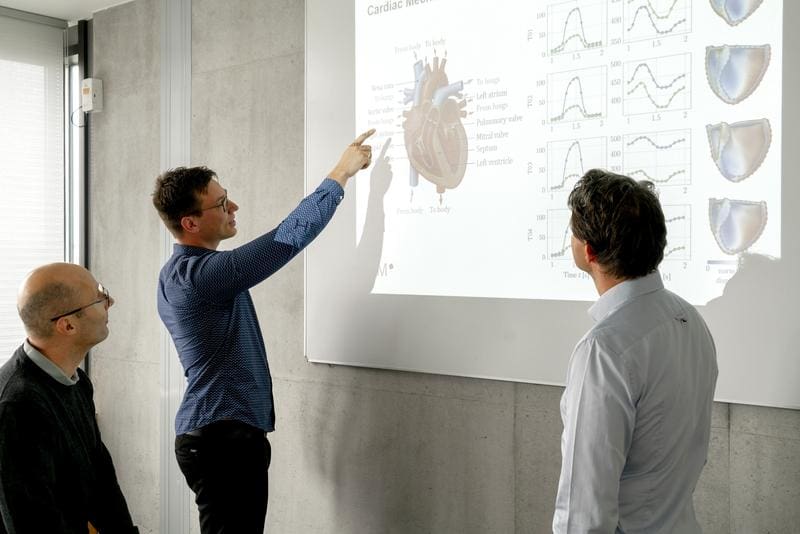
Previous simulations were slow and only laboriously adaptable, with hours of computing time per pulse beat. In cooperation with the Technical University of Munich, a new model with AI and Reduced Order Model was developed that reproduces geometry in detail, requires less computing power and identifies movement patterns.
The model is based on 70 anonymized MRI data sets and simulates an average heart with deviations that can be individualized. It provides insights into physical processes and potentially predicts surgical interventions.
The project is funded by the Bavarian State Ministry of Science and the Arts and implemented with AdjuCor GmbH and the Technical University of Munich.
Editor: X-Press Journalistenbüro GbR
Gender Notice. The personal designations used in this text always refer equally to female, male and diverse persons. Double/triple naming and gendered designations are used for better readability. ected.
Most read
 Hantavirus: detection, symptoms, therapy What is hantavirus? Hantaviruses are a group of viruses that occur worldwide and are mainly transmit...
- Impending fuel shortage: “If the laboratory fails, medical care will come to a standstill in large parts” DGKL CEO Jan Wolter explains the dramatic consequences of a potential fuel shortage for laboratory m...
- Hantavirus: Facts instead of panic Reports of three deaths in connection with a hantavirus outbreak on the cruise ship "MV Hondius" in...